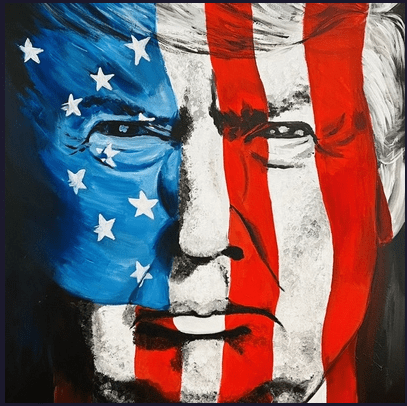
President Trump recently posted “SEDITIOUS BEHAVIOR, punishable by DEATH!”, lashing out at Democratic lawmakers who suggested troops should refuse any illegal orders from a future Trump administration. It is a legal and Constitutional obligation for troops to refuse illicit orders. Once again, Trump’s rhetoric follows a pattern of authoritarian leaders weaponizing sedition and treason charges to eliminate or intimidate their political opponents. Hitler and Stalin accused political opponents of seditious plots and disloyalty.
Sedition is inciting rebellion against the authority of the state, and throughout history autocrats have stretched that definition to smear any dissent as an existential threat. Individuals voicing opposition against authoritarians have been subjected to the weaponization of criminal laws against sedition or treason under repressive regimes.
Immediately after becoming Chancellor in 1933, Hitler outlawed dissent. The pretext came on February 27, 1933, when the Reichstag building burned. Hitler’s government blamed communist opponents for the fire and decreed a state of emergency. The ensuing Reichstag Fire Decree suspended civil liberties and allowed mass arrests of Communists and other anti-Nazi activists. In effect, Hitler categorized his political rivals as seditious saboteurs endangering the nation, thus legitimizing extrajudicial crackdowns. Thousands of Hitler’s opponents were rounded up and put in newly established concentration camps, often without formal charges beyond being labeled enemies of the state. The Trump administration has already started extrajudicial arrests via ICE.
The Nazi regime passed broad laws against “malicious acts” and “treachery” that criminalized any criticism of the government as sedition. Jokes about Hitler, owning anti-Nazi pamphlets, even listening to foreign radio could be deemed political crimes. Ordinary courts became tools of Nazi policy, but more notorious was the extrajudicial People’s Court created in 1934 specifically to handle political offenses like treason. Young activists Sophie and Hans Scholl were sentenced to death for treasonous activities for simply urging Germans to resist Nazi atrocities.
Stalin, too, weaponized prosecution against sedition, often calling his political enemies that enemy of the people, a phrase that Trump echoes religiously. Simply being suspected of disloyalty was enough under Stalin’s rule to warrant imprisonment, torture, or execution. Stalin’s paranoia about sedition culminated in the Great Purge of 1936–1938 where he staged show trials in Moscow. Former Communist party leaders like Grigory Zinoviev, Lev Kamenev, and Nikolai Bukharin were forced to confess to fantastical plots and treasonous conspiracies. The old Bolshevik had once stood at Lenin’s side but were then accused of everything from sabotage to colluding with Nazi Germany. They were swiftly convicted of treason and shot, their deaths being functional messages. It ended up being a purge that swept up hundreds of thousands of ordinary Soviet citizens, but it started with just a few cases of sedition.
There were similar patterns in Fascist Italy and Franco’s Spain. Mussolini seized power in the 1920s and quickly moved to suppress dissent. Mussolini banned opposition parties and established a Special Tribunal for State Security to prosecute political crimes. One of the most famous victims of Mussolini’s repression was the Marxist thinker and parliamentarian Antonio Gramsci. At Gramsci’s trial in 1928, the Fascist prosecutor openly declared the regime’s intent: “For twenty years we must stop this brain from functioning.” Gramsci was guilty only of writing and organizing against fascism but was silenced with a 20-year prison sentence of which he served about 11 when he died.
Franco’s Spain also featured sedition charges intended to intimidate and control entire segments of society after the Spanish Civil War. The Franco regime proceeded to arrest and punish anyone suspected of disloyalty to the new order. Tens of thousands of people were deemed traitors. Not attending Catholic Mass, for instance, could mark one as a leftist and thus a target. Prisons overflowed with political detainees; by one estimate, 200,000 people were executed in the immediate post-war years on charges of treason or rebellion. Another 250,000 languished in prisons and concentration camps by 1940. Franco’s use of sedition law was sweeping and vindictive with the underlying intention being to permanently eliminate the social base of Republican sympathies.
Trump parrots authoritarian leaders seemingly daily now. He can do so freely because of the same First Amendment protections afforded Sen. Elissa Slotkin, Sen. Mark Kelly, Rep. Jason Crow, Rep. Maggie Goodlander, Rep. Chris Deluzio and Rep. Chrissy Houlahan who urged troops to obey the Constitution over any illegal orders. Trump’s authoritarian response reinforces their message.
Historically in the U.S., there have been many worries that leaders would leverage powers against sedition to target their political opponents. Madison wrote that “the unconstitutional power exercised over the press by the ‘sedition act’ ought more than any other to produce universal alarm.” Justice Holmes in Abrams v. United States (1919) wrote “we should be eternally vigilant against attempts to check the expression of opinions that we loathe and believe to be fraught with death”. Justice Brennan in New York Times v. Sullivan (1964) wrote “the great controversy over the Sedition Act of 1798 crystallized a national awareness of the central meaning of the First Amendment.” And Justice Douglas in Brandenburg v. Ohio (1969) wrote, “I see no place in the regime of the First Amendment for any ‘clear and present danger’ test.” The dangers of threats of umbrellic charges of sedition are authoritarian in nature.
Hannah Arendt wrote that “The ideal subject of totalitarian rule is not the convinced Nazi or Communist, but people for whom the distinction between fact and fiction and the distinction between true and false no longer exist.” Now, a segment of the American public lives in a world of alternative facts where Trump’s words are the dogmatic truth, which makes it so much easier for him to convince his followers that patriots are traitors, that the criminal is the victim. Arendt warned that when truth is obliterated, tyranny finds fertile ground. And this is where we are at today. Defenders of Trump claim he can’t be fascist because he hasn’t done those things that fascists ended up doing. But the fascists and other authoritarians didn’t start with massive concentration camps and campaigns of terror. Trump is already using their rhetoric like a playbook, his actions restrained only by the courts. Trump hasn’t locked up his political opponents for sedition yet because he can’t. If he gets that opportunity, we might have to start taking him at his word.
 Epistemica
Leave a comment