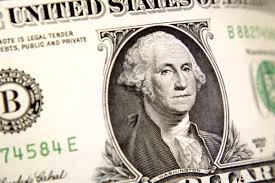
There’s a constant obsession in the U.S. about how much of “our own money” we get to keep. The right has made this language almost sacred, while much of the left has too often accepted the same premise, fighting over who should pay how much rather than asking what money is worth, who controls its value, and what kind of society it creates. A dollar kept after taxes is not much of a victory if it buys less at the grocery store, less security in rent, less confidence abroad, and less dignity at home. Trump’s policies have exposed and accelerated the vulnerability of a modern economic system that earlier thinkers warned us about centuries ago.
Max Weber saw modern capitalism as a form of discipline. In The Protestant Ethic and the Spirit of Capitalism, he described a world in which rational calculation, work, debt, accounting, and accumulation. Weber referred to the “iron cage” and a “shell as hard as steel,” referring to the modern economic rationality becoming a structure people no longer choose freely but are forced into. The “light cloak” of material concern, Weber wrote, became an “iron cage.”
There was a time that Weber’s iron cage was visualized as mines and factories. Today, though, financial instruments are creating the case with treasury bonds, mortgage-backed securities, tariffs, derivatives, credit ratings, dollar reserves, campaign contributions, and central-bank expectations all contributing. Each is a way of coordinating a vast economy, and when society begins to serve them rather than using them to serve society, we become overly dependent on them.
Everyone wants to keep more of their dollars with each paycheck, and that’s fine, but it misses the bigger picture. The dollar should reflect stability, which is where it gets its buying power from. The government pays its debts, the central bank is credible, the economy produces goods people need, and the society will not allow private power to eat the republic from within.
Rousseau saw the broader dangers of a modern economy, and foreshadowed some of the issues that Trumponomics has created. In The Social Contract, Rousseau warned that money can become a substitute for citizenship. “Make gifts of money,” he wrote, “and you will not be long without chains.” He added that “finance is a slavish word.” Rousseau was attacking the idea that citizens could pay their way out of public obligation. Once money replaces civic responsibility, the wealthy are buying exemptions. They buy law. Influence, and an expanded right to make everyone else live inside the consequences of their private bargains.
Trump is both a source and a symptom of the crisis. He did not invent the rule of money in American politics. The SCOTUS 2010 Citizens United decision allowed corporations and unions to fund independent political expenditures and electioneering communications, while leaving direct corporate contribution limits formally intact. In practice, the decision intensified a political culture in which money speaks with extraordinary volume. Corporations, billionaires, trade associations, and lobbyists do not need to seize the state when they can surround it, finance it, staff it, threaten it, and draft its language. Trump’s politics emerged from that world where there is spectacle on the surface and financial dependence underneath.
The 2008 financial crisis already showed how rational instruments can become irrational systems. Mortgages were pooled, sliced, rated, insured, and sold until debt appeared to have been transformed into wealth. The Federal Reserve’s historical account of the crisis emphasizes the expansion of credit to high-risk borrowers, the packaging of mortgages into securities, and the failure to understand the risk embedded in those instruments. The result was not just a Wall Street panic. The Great Recession pushed U.S. GDP down by 4.3% and unemployment up to 10%. The steel shell cracked, and ordinary workers discovered that they lived inside it.
COVID-19 exposed the weakness of just-in-time supply chains, dependence on distant production, shortages of critical goods, and the fantasy that efficiency is the same as resilience. The system that had been praised as rational turned out to be brittle.
Trump’s policies have now revealed a third vulnerability in the dollar itself. His tariff regime reflects taxes hidden inside prices. In April 2025, Trump invoked emergency authority and declared trade deficits, foreign trade practices, and lack of reciprocity an “unusual and extraordinary threat,” imposing broad new duties through Executive Order 14257.
The Congressional Budget Office projects that tariff changes have raised inflation, reduced real investment, lowered real GDP, and reduced employment. The Federal Reserve Bank of St. Louis found that tariffs were already exerting measurable upward pressure on consumer prices in 2025, accounting for a meaningful share of annualized inflation in the summer months. The dollar’s value is measured against the euro, yen, and yuan, but also in eggs, rent, electricity, insurance, and medicine.
By March 2026, the Bureau of Labor Statistics reported that the Consumer Price Index was up 3.3% over the previous twelve months. Food away from home was up 3.8%, full-service meals were up 4.3%, shelter was up 3.0%, household furnishings were up 4.0%, and energy prices were up 12.5% over the year. A person may keep a few more dollars through a tax cut and still become poorer if those dollars command less food, less housing, and less stability.
The dollar’s external value has also shown strain as the dollar plunged 12% against major currencies in 2025. J.P. Morgan Asset Management showed that the dollar index fell 10.7% in 2025, pointing to slower growth, deficits, policy uncertainty, and global capital flows. Trump’s tariffs, attacks on Federal Reserve independence, and distancing from allies and global institutions contributed to pressure on the dollar, even while the dollar retained its dominant reserve-currency role.
Investors still hold dollars because they trust the U.S. to maintain deep markets, lawful institutions, predictable policy, and an independent central bank. When a president threatens the Federal Reserve, treats alliances as shakedown opportunities, turns tariffs into permanent bargaining weapons, and converts trade policy into personal theater, he makes the dollar look less like the anchor of a stable order and more like an instrument of faction.
Despite being espoused as a strict capitalist by the right today, Adam Smith understood that money matters because of what it can command. Wealth, in his account, is tied to “the power of purchasing” instead of coins or notes. Smith also warned that no society can flourish when most of its people are poor and miserable. And he was deeply suspicious of laws proposed by merchants and manufacturers, because their interests could diverge from the public good. Smith would have recognized the danger of a political economy in which corporate influence writes the rules, politicians sell tax cuts as liberty, and households pay for the arrangement through higher prices and lower security.
The fetishism of GDP hides this. Politicians love GDP because it turns social life into a single upward-moving number. But GDP can rise while families are squeezed, communities decline, debt explodes, and prices rise. The CBO has noted that higher nominal GDP projections can partly reflect higher price levels stemming from tariffs. In other words, the economy can look bigger because life is more expensive.
Trump’s tariffs fall most heavily on consumers. Inflation hurts workers whose wages lag prices. High interest costs punish borrowers. Asset owners can hedge through stocks, real estate, commodities, foreign currency, and political access. The poor and working class hold their wealth in wages, checking accounts, and fragile claims on future stability. When the dollar weakens and prices rise, the rich rebalance. Everyone else cuts back.
This is the disaster toward which the country is drifting. It is a fusion of recession, debt crisis, and inflation. A weaker dollar means imported goods cost more. Higher tariffs mean domestic firms can raise prices under cover of protection. Higher deficits mean more debt-service pressure. Weaker institutions mean investors demand more compensation for risk. Corporate political power means the pain is distributed downward. The result is a society where the top buys insulation and the rest buy less.
Rousseau’s chains can be seen as rent contracts, medical bills, variable-rate loans, grocery receipts, student debt, insurance premiums, and campaign-finance structures that make democratic correction harder. Weber’s steel cage is the whole machinery of “rational” finance when it forgets the human beings it was supposed to serve. Trump’s trailer park charisma is the dramatization of the cage while pretending to break it. He attacks globalism while protecting oligarchy. He denounces elites while empowering private wealth, and promises stronger money while making each dollar socially and internationally less secure.
The older thinkers were warning us against a civilization that lets money become master. Smith knew the economy must serve social flourishing. Rousseau knew finance could replace citizenship with dependency. Weber knew rational systems could harden into prisons. The question now is whether Americans can learn the same lesson before the dollar’s decline becomes a social verdict.
The value of the dollar will not be restored merely by cutting taxes, chanting about growth, or bullying trading partners, but, if ever at all, by rebuilding the social conditions that make money trustworthy, including credible institutions, honest budgets, resilient production, limits on purchased politics, protection of central-bank independence, and an economy judged by how ordinary people live rather than how large the aggregate number becomes. Otherwise, Americans will keep more of “their own money” only to discover that their money is actually worth a lot less.


Leave a comment